Body Shape Control Suit
Solo (advised by Dr. Xiao Xiao) · 2025
Overview
Modern workplaces adapt to us through software. Physical posture interventions stay static: the same chair, the same advice, the same reminder to sit up straight.
The Body Shape Control Suit explores an adaptable, modular wearable, customizable in both its sensing and its feedback, to analyse posture and movement risk for desk-based work. It deliberately avoids real-time correction and focuses on post-session biofeedback: the patterns of strain, asymmetry and slouching that build up over hours, not the single bad moment.
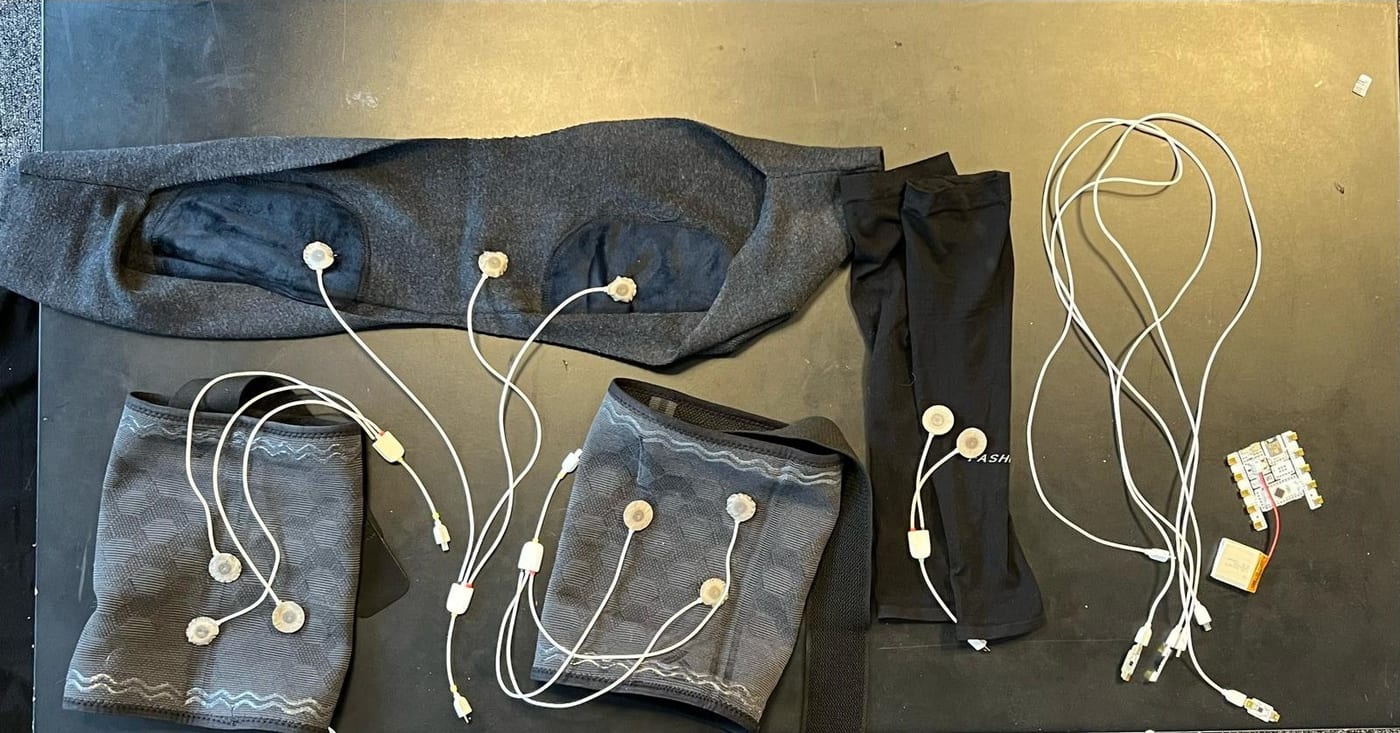
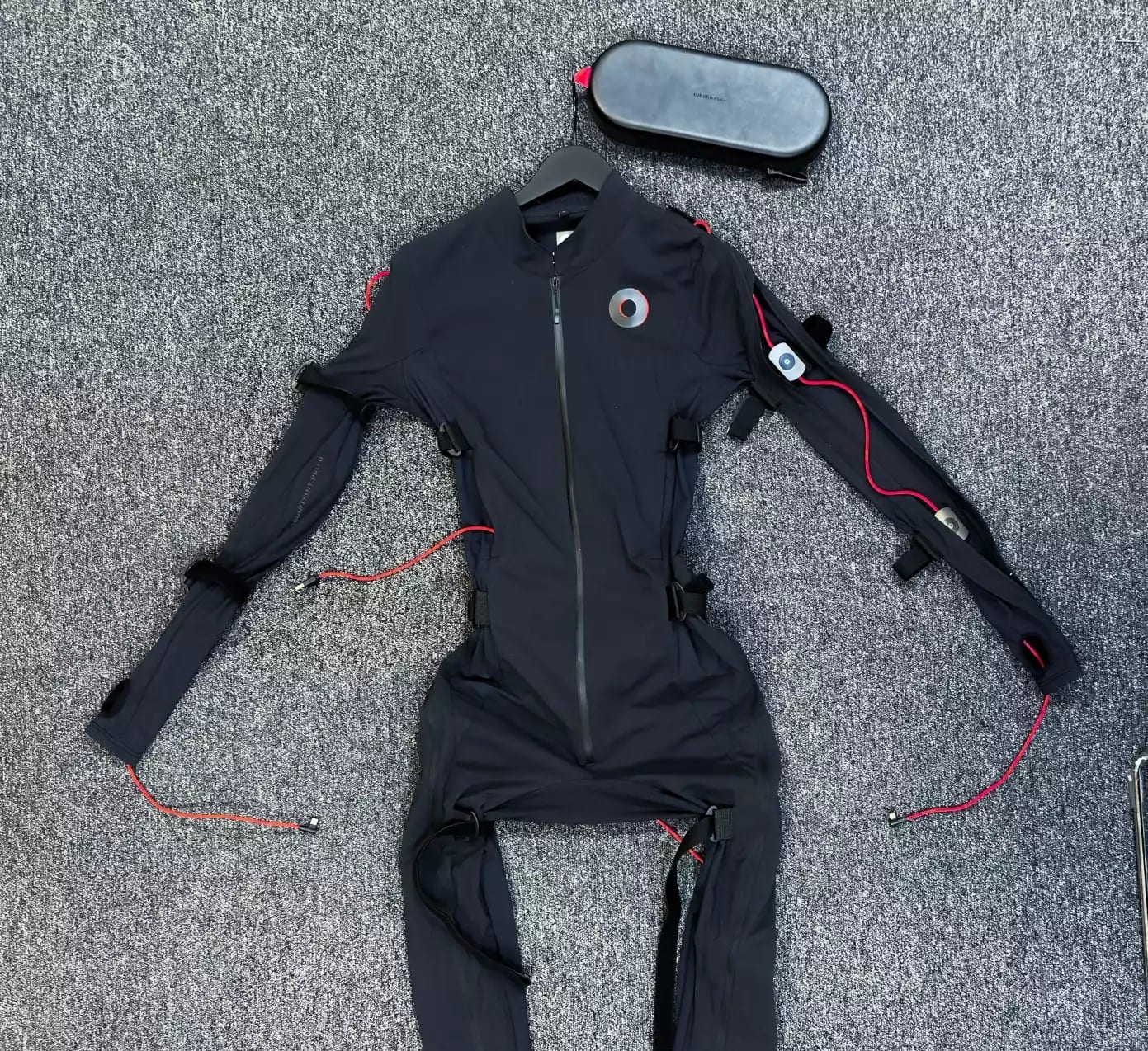
Multimodal sensing
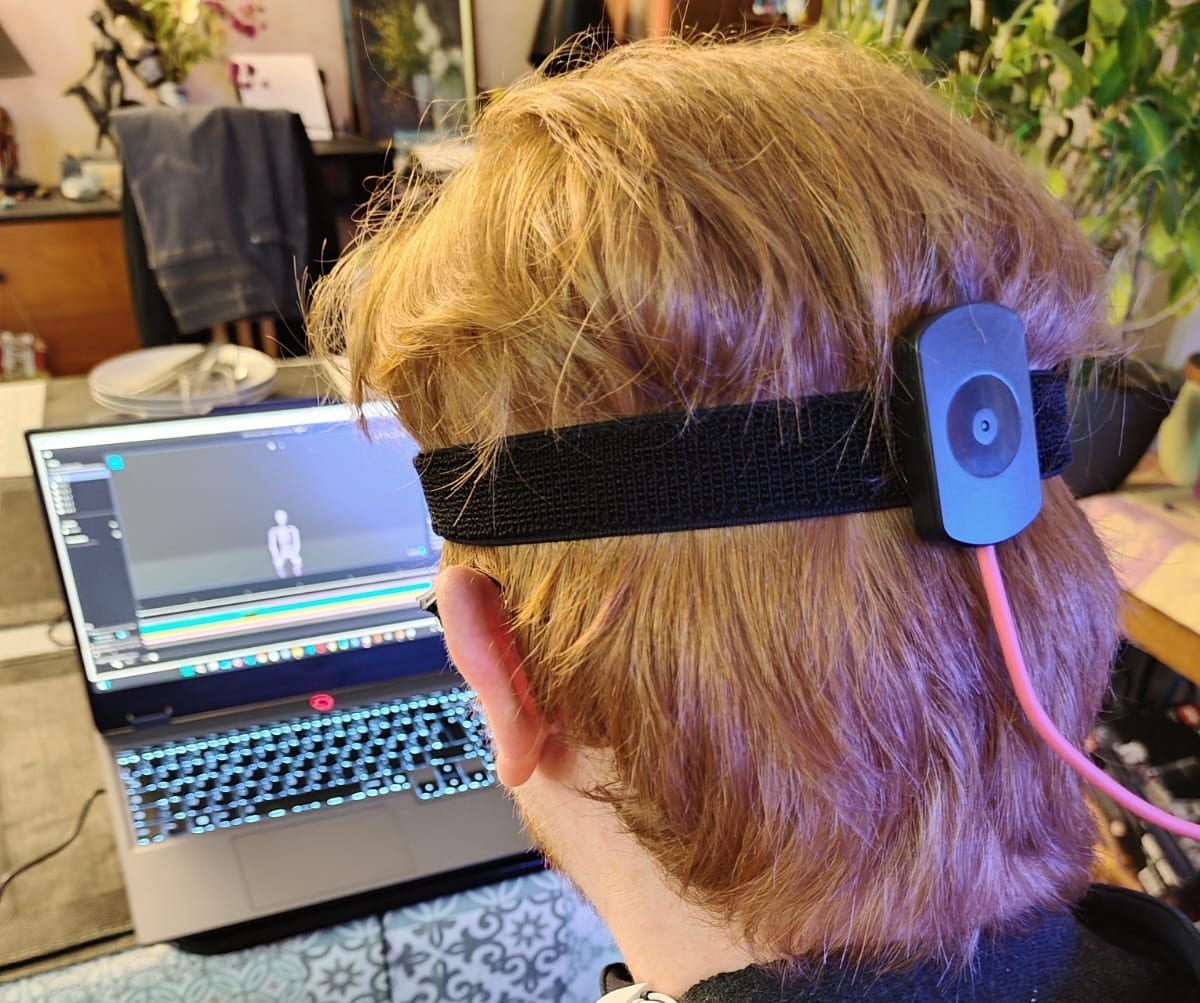
Two modalities are fused: surface EMG for muscle activity, and motion capture for body kinematics. EMG runs on a PLUX BITalino through OpenSignals. Full-body kinematics come from the Rokoko Smartsuit and its IMUs.
Wiring the EMG chain: BITalino (r)evolution Plugged
Every EMG reading in this project starts with the same five-minute assembly. Worth documenting, because most of what gets called “bad EMG data” turns out to be a cable in the wrong port or a sampling rate nobody checked.
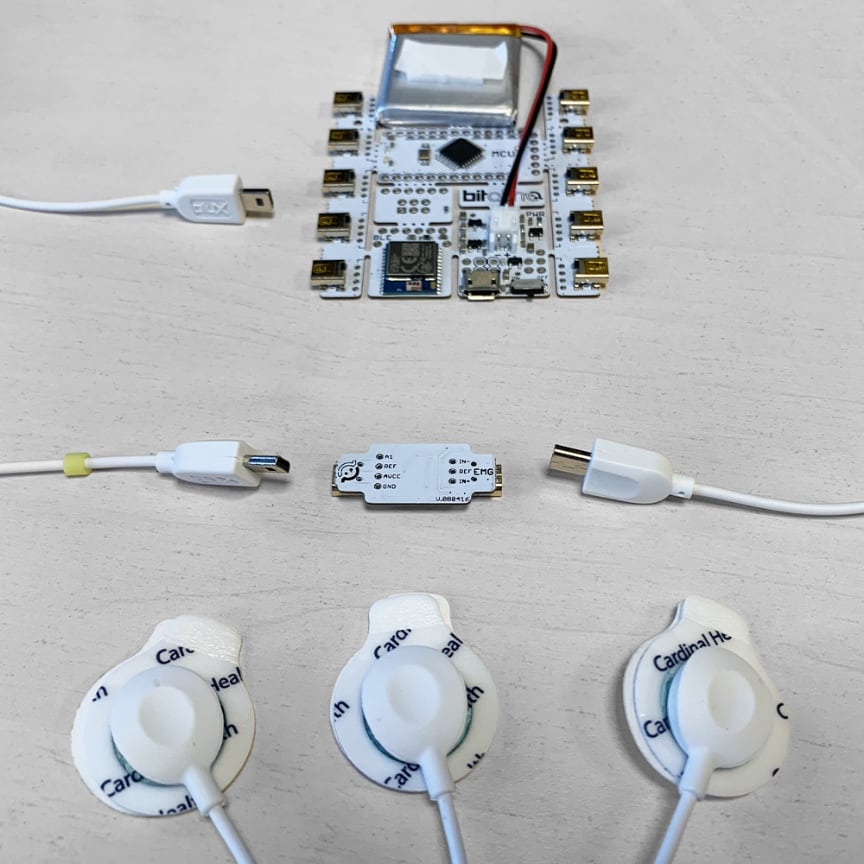
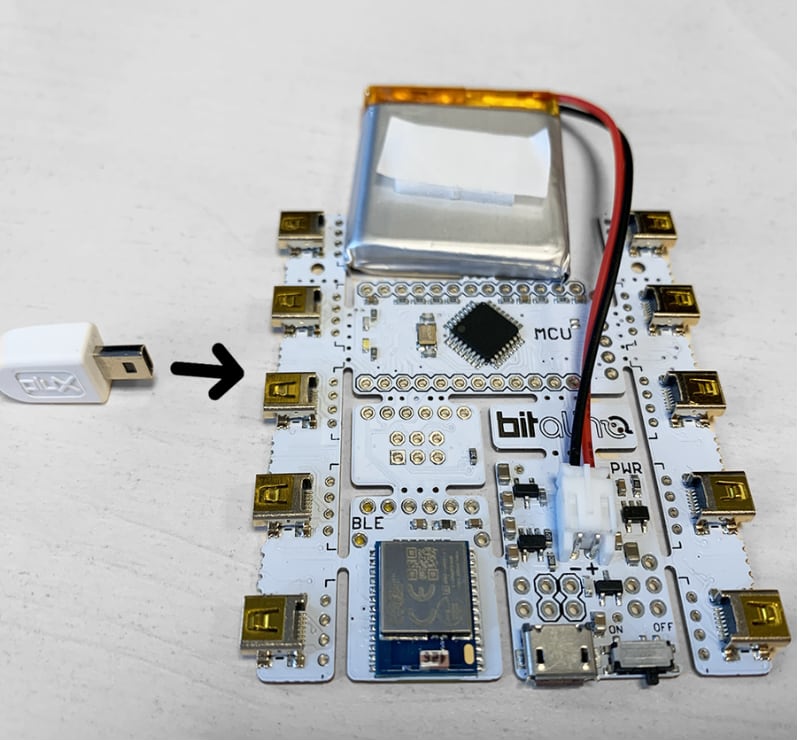
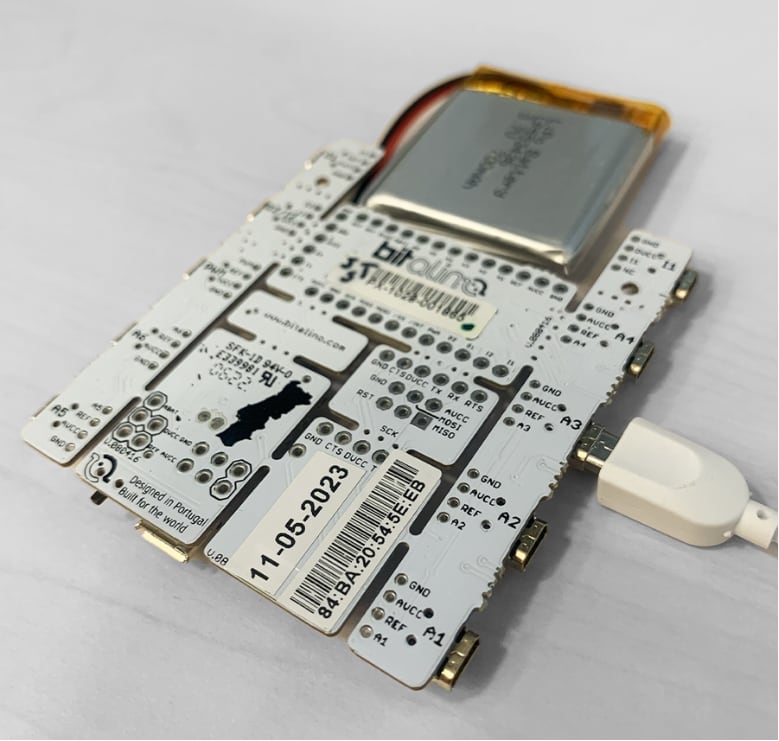
A1 to A6, and the sticker carries the Bluetooth MAC.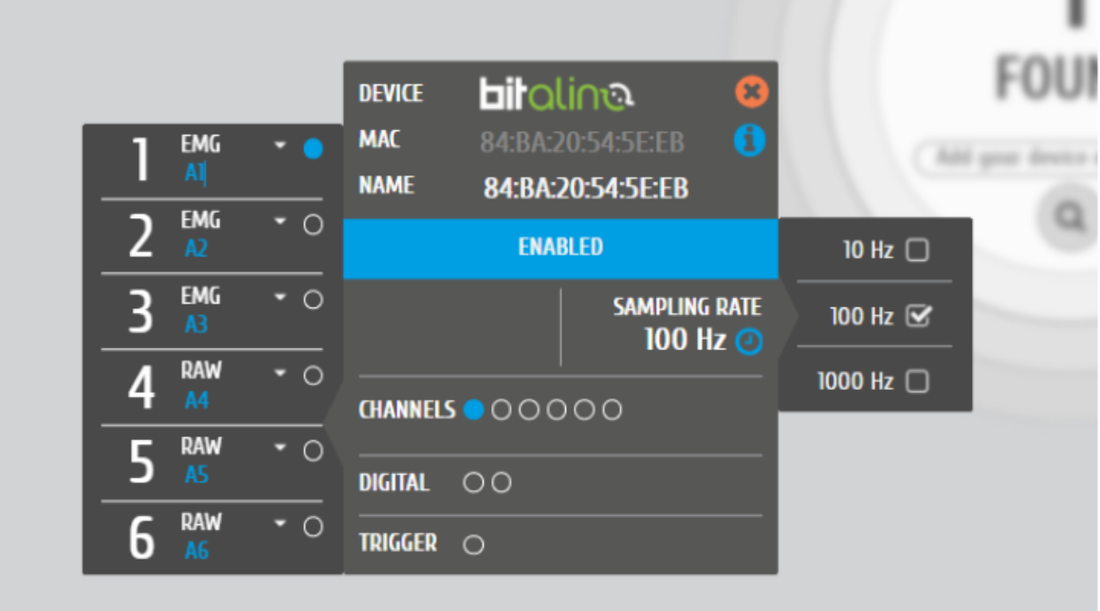
A1 to A3 as EMG) and set the sampling rate. Whatever is ticked here is what the recording actually contains.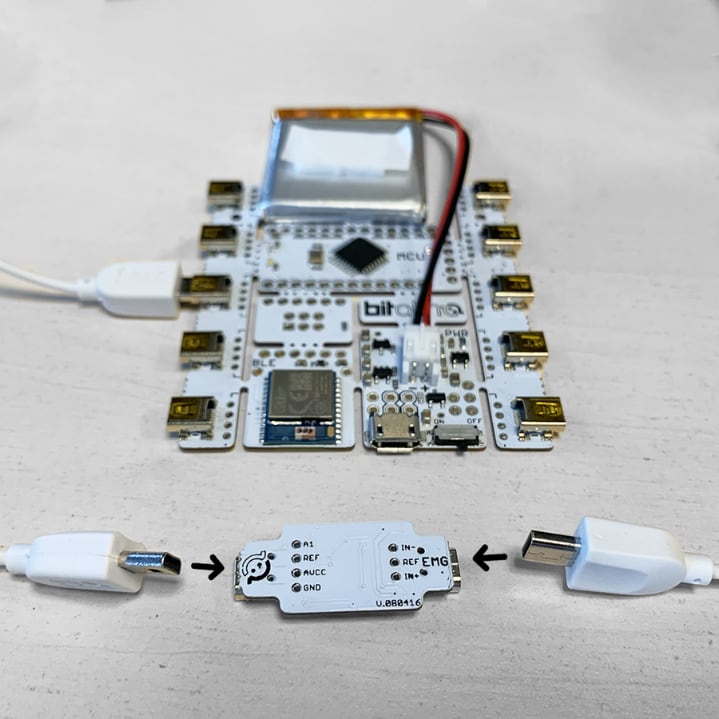
A1 / REF / AVCC / GND, body side IN− / REF / IN+.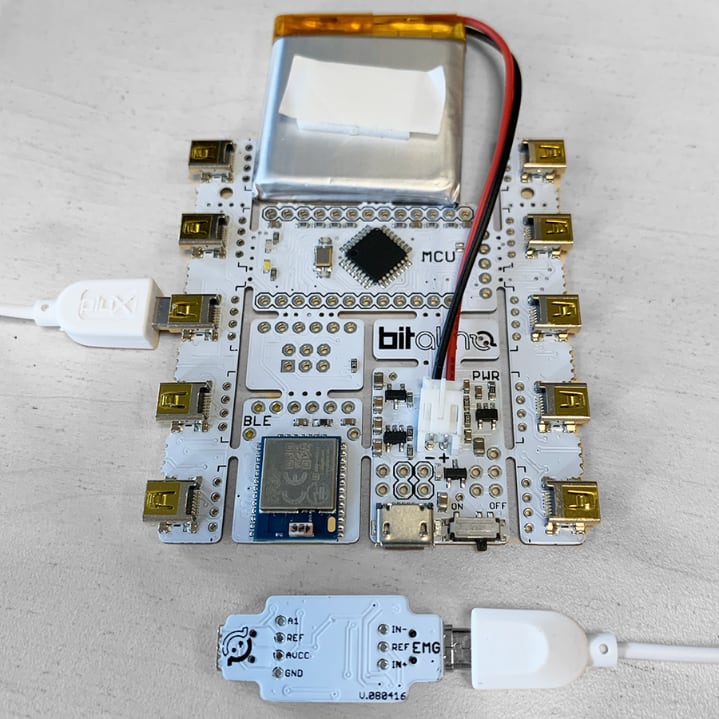
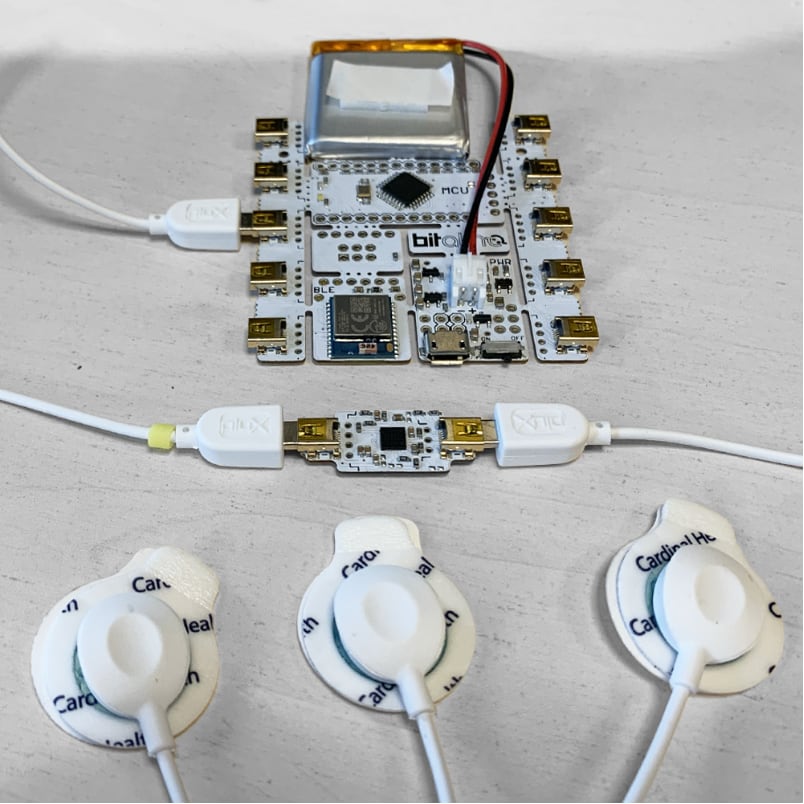
IN+ and IN− straddle the muscle belly along the fibre direction, REF goes on a bony, electrically quiet spot. That differential pair is what rejects everything the muscle did not produce.One module per channel. Adding a second muscle means another cable, another sensor, another port, and that is exactly what makes the suit modular rather than a fixed garment.
AI pose estimation and anatomy
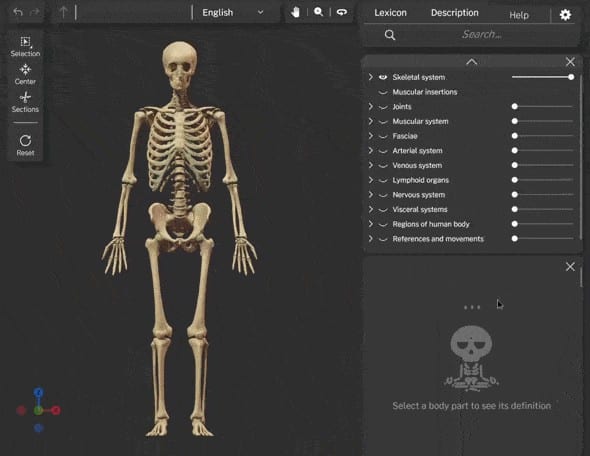
A pose-estimation pipeline is adapted to the Rokoko armature, and an AI model is trained on Z-Anatomy muscle descriptions so it can reason about back-muscle activation and posture deviation.
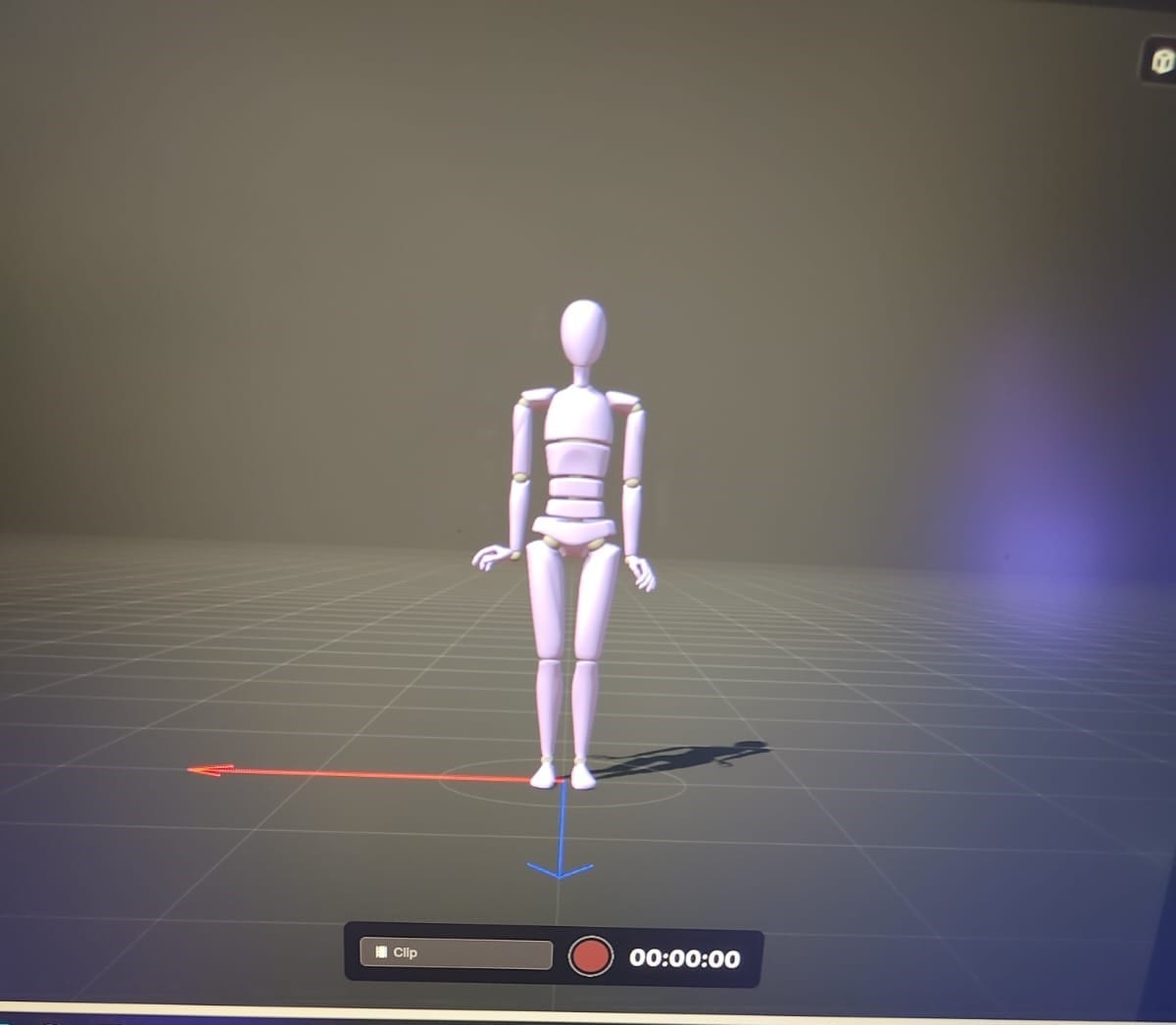
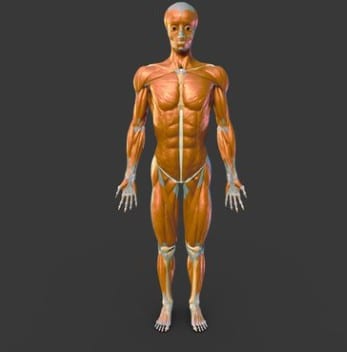
An open-source, interactive 3D atlas of human anatomy. I used its layer-by-layer muscle model and its descriptions to train the posture-analysis AI. Credit goes to its authors. It is a dependency of this project, not my work.
Applications
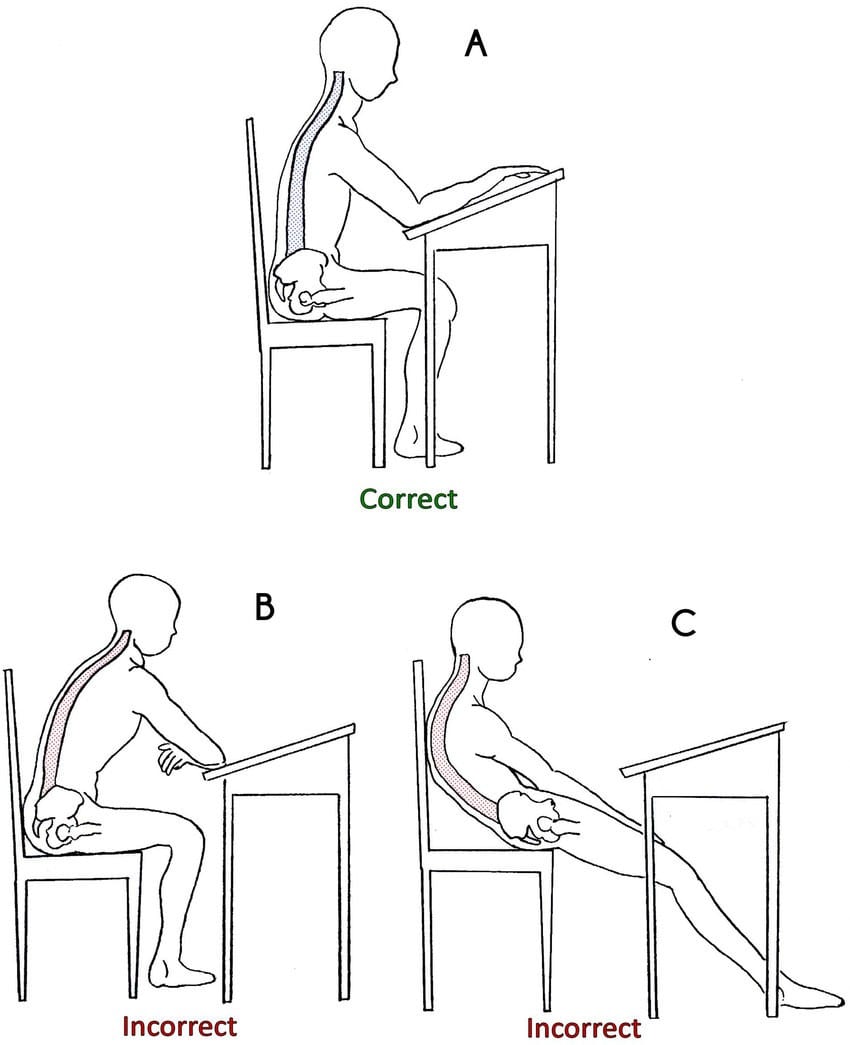
Office ergonomics, workplace-injury prevention, physical rehabilitation. The goal is to help desk workers see the postures that quietly cause long-term musculoskeletal strain.
R&D: feedback, later
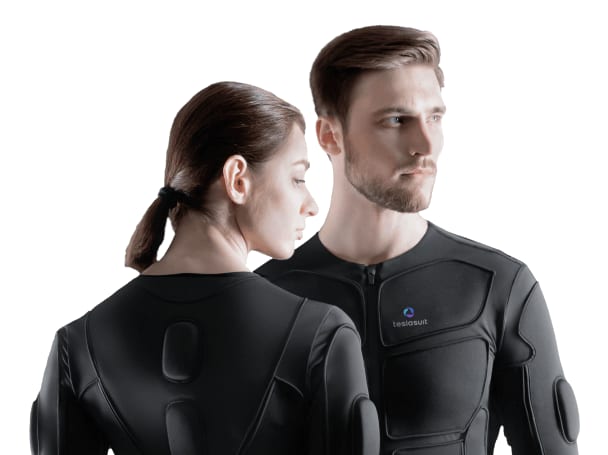
Beyond analysis, the roadmap explores active feedback. Full-body haptic suits such as the Teslasuit were studied as a way to nudge posture in real time.
Described in depth in my Master’s thesis, From Gameplay to Workplace Health: EMG and Motion Capture for Posture Detection and Biofeedback Analysis.
Überblick
Moderne Arbeitswelten passen sich uns über Software an. Eingriffe in die körperliche Haltung bleiben statisch: derselbe Stuhl, derselbe Rat, dieselbe Erinnerung, gerade zu sitzen.
Der Body Shape Control Suit erforscht ein anpassbares, modulares Wearable, das sowohl in der Erfassung als auch im Feedback konfigurierbar ist, um Haltung und Bewegungsrisiko am Schreibtisch zu analysieren. Er verzichtet bewusst auf Korrektur in Echtzeit und konzentriert sich auf Biofeedback nach der Sitzung: die Muster aus Belastung, Asymmetrie und Zusammensacken, die sich über Stunden aufbauen, nicht der eine schlechte Moment.
Multimodale Erfassung
Zwei Modalitäten werden verschmolzen: Oberflächen-EMG für Muskelaktivität und Motion Capture für Körperkinematik. Das EMG läuft über einen PLUX BITalino mit OpenSignals. Die Ganzkörperkinematik kommt vom Rokoko Smartsuit und seinen IMUs.
Die EMG-Kette verkabeln: BITalino (r)evolution Plugged
Jede EMG-Messung in diesem Projekt beginnt mit demselben Fünf-Minuten-Aufbau. Das ist dokumentationswürdig, denn das meiste, was „schlechte EMG-Daten“ genannt wird, entpuppt sich als Kabel im falschen Port oder als Abtastrate, die niemand geprüft hat.
A1 bis A6 beschriftet, und der Aufkleber trägt die Bluetooth-MAC.A1 bis A3 als EMG) und die Abtastrate setzen. Was hier angehakt ist, ist genau das, was die Aufnahme enthält.A1 / REF / AVCC / GND, Körperseite IN− / REF / IN+.IN+ und IN− umschließen den Muskelbauch in Faserrichtung, REF kommt auf einen knöchernen, elektrisch ruhigen Punkt. Dieses Differenzpaar verwirft alles, was der Muskel nicht erzeugt hat.Ein Modul pro Kanal. Ein zweiter Muskel bedeutet ein weiteres Kabel, einen weiteren Sensor, einen weiteren Port, und genau das macht den Anzug modular statt starr.
KI-Posenschätzung und Anatomie
Eine Pipeline zur Posenschätzung wird auf die Rokoko-Armatur angepasst, und ein Modell wird auf den Muskelbeschreibungen von Z-Anatomy trainiert, um über Rückenmuskelaktivierung und Haltungsabweichungen zu schließen.
Ein quelloffener, interaktiver 3D-Atlas der menschlichen Anatomie. Ich habe sein schichtweises Muskelmodell und seine Beschreibungen genutzt, um die KI zur Haltungsanalyse zu trainieren. Der Verdienst gehört den Autoren. Es ist eine Abhängigkeit dieses Projekts, nicht meine Arbeit.
Anwendungen
Büroergonomie, Prävention von Arbeitsverletzungen, Rehabilitation. Ziel ist, Schreibtischarbeitenden sichtbar zu machen, welche Haltungen still und leise langfristige Muskel-Skelett-Beschwerden verursachen.
F&E: Feedback, später
Über die Analyse hinaus erkundet die Roadmap aktives Feedback. Ganzkörper-Haptikanzüge wie der Teslasuit wurden als Weg untersucht, Haltung in Echtzeit zu stupsen.
Ausführlich beschrieben in meiner Masterarbeit From Gameplay to Workplace Health: EMG and Motion Capture for Posture Detection and Biofeedback Analysis.
Vue d’ensemble
Le monde du travail s’adapte à nous par le logiciel. Les interventions sur la posture physique, elles, restent figées : même chaise, même conseil, même rappel de se tenir droit.
La Body Shape Control Suit explore un vêtement adaptable et modulaire, personnalisable à la fois dans ses capteurs et dans son retour, pour analyser la posture et les risques de mouvement au bureau. Elle évite délibérément la correction en temps réel et se concentre sur le biofeedback après séance : les schémas de tension, d’asymétrie et d’avachissement qui s’installent sur des heures, pas le mauvais instant isolé.
Capter sur deux modalités
Deux modalités sont fusionnées : l’EMG de surface pour l’activité musculaire, et la motion capture pour la cinématique du corps. L’EMG tourne sur un PLUX BITalino via OpenSignals. La cinématique complète vient de la Rokoko Smartsuit et de ses centrales inertielles.
Câbler la chaîne EMG : BITalino (r)evolution Plugged
Toute mesure EMG de ce projet commence par le même montage de cinq minutes. Il mérite d’être documenté, parce que la plupart de ce qu’on appelle « mauvaises données EMG » se révèle être un câble dans le mauvais port ou une fréquence d’échantillonnage que personne n’a vérifiée.
A1 à A6, et l'étiquette porte l'adresse MAC Bluetooth.A1 à A3 en EMG) et règle la fréquence d'échantillonnage. Ce qui est coché ici est exactement ce que contiendra l'enregistrement.A1 / REF / AVCC / GND, côté corps IN− / REF / IN+.IN+ et IN− encadrent le ventre du muscle dans le sens des fibres, REF se pose sur un point osseux, électriquement calme. C'est cette paire différentielle qui rejette tout ce que le muscle n'a pas produit.Un module par canal. Ajouter un second muscle demande un câble de plus, un capteur de plus, un port de plus, et c’est exactement ce qui rend la combinaison modulaire plutôt que figée.
Estimation de pose par IA et anatomie
Un pipeline d’estimation de pose est adapté à l’armature Rokoko, et un modèle est entraîné sur les descriptions musculaires de Z-Anatomy pour raisonner sur l’activation des muscles du dos et les écarts de posture.
Un atlas 3D interactif et open source de l'anatomie humaine. J'ai utilisé son modèle musculaire couche par couche et ses descriptions pour entraîner l'IA d'analyse posturale. Le crédit revient à ses auteurs. C'est une dépendance de ce projet, pas mon travail.
Applications
Ergonomie de bureau, prévention des blessures au travail, rééducation. L’objectif est d’aider les personnes en poste assis à voir les postures qui provoquent en silence des troubles musculo-squelettiques durables.
R&D : le retour, plus tard
Au-delà de l’analyse, la feuille de route explore le retour actif. Des combinaisons haptiques corps entier comme la Teslasuit ont été étudiées comme moyen de pousser la posture en temps réel.
Décrit en détail dans mon mémoire de master, From Gameplay to Workplace Health: EMG and Motion Capture for Posture Detection and Biofeedback Analysis.
概要
いまの職場はソフトウェアを通じて人に合わせてきます。ところが身体の姿勢への介入は動きません。同じ椅子、同じ助言、同じ「背筋を伸ばして」の通知です。
Body Shape Control Suit は、センシングとフィードバックの両方を組み替えられる、適応的でモジュール式のウェアラブルを探る試みです。目的はデスクワークにおける姿勢と動作リスクの分析。あえてリアルタイムの矯正は避け、セッション後のバイオフィードバックに集中します。狙うのは、たった一度の悪い瞬間ではなく、何時間もかけて積み上がる負荷・左右差・猫背のパターンです。
2つのモダリティで捉える
融合するのは2つです。筋活動をみる表面筋電(sEMG)と、身体の運動学をみるモーションキャプチャ。筋電は PLUX BITalino を OpenSignals 経由で動かします。全身の運動学は Rokoko Smartsuit とその IMU から取得します。
EMG チェーンの配線:BITalino (r)evolution Plugged
このプロジェクトの筋電計測は、毎回この5分の組み立てから始まります。書き残す価値があるのは、「EMG のデータが悪い」と言われるものの大半が、実際にはケーブルの挿し間違いか、誰も確認しなかったサンプリングレートだからです。
A1 から A6 の表示があり、シールに Bluetooth の MAC アドレスが書かれています。A1 から A3 を EMG に)、サンプリングレートを設定します。ここでチェックしたものが、そのまま記録の中身になります。A1 / REF / AVCC / GND、身体側が IN− / REF / IN+ です。IN+ と IN− が筋繊維の向きに沿って筋腹をはさみ、REF は骨の上、電気的に静かな場所に貼ります。この差動ペアが、その筋肉が出したのではない信号をすべて打ち消してくれます。チャンネルごとにモジュールが1つ。筋肉を1つ増やすたびにケーブル、センサー、ポートが1つずつ増えます。まさにそれが、このスーツを固定された衣服ではなくモジュール式にしている点です。
AI による姿勢推定と解剖学
姿勢推定のパイプラインを Rokoko のアーマチュアに合わせ、Z-Anatomy の筋肉記述で AI モデルを学習させて、背部の筋活動と姿勢のずれについて推論させます。
応用先
オフィスの人間工学、労働災害の予防、リハビリテーション。デスクワークをする人が、長期的な筋骨格系の負担を静かに生んでいる姿勢を自分で見られるようにするのが狙いです。
R&D:フィードバックはこの先
分析の先として、ロードマップでは能動的なフィードバックを検討しています。Teslasuit のような全身ハプティックスーツを、リアルタイムに姿勢をそっと促す手段として調べました。
詳細は修士論文 From Gameplay to Workplace Health: EMG and Motion Capture for Posture Detection and Biofeedback Analysis に記載しています。
概览
现代职场通过软件来适应我们,但对身体姿势的干预始终是静止的:同一把椅子、同一句建议、同一条「坐直」的提醒。
Body Shape Control Suit 探索的是一件可适应、模块化的可穿戴设备,在传感和反馈两端都能重新配置,用来分析久坐工作的姿势与动作风险。它刻意不做实时纠正,而是专注于训练后的生物反馈:那些在几小时里慢慢累积的紧张、不对称和塌陷模式,而不是某个孤立的坏瞬间。
多模态感知
融合两种模态:测量肌肉活动的表面肌电(sEMG),以及测量身体运动学的动作捕捉。肌电通过 PLUX BITalino 配合 OpenSignals 采集,全身运动学则来自 Rokoko Smartsuit 及其惯性测量单元。
连接 EMG 链路:BITalino (r)evolution Plugged
这个项目里每一次肌电测量,都从同样的五分钟装配开始。值得写下来,是因为大多数被称作「EMG 数据不好」的情况,最后都归结为线插错了口,或者没人核对采样率。
A1 到 A6,贴纸上是蓝牙 MAC 地址。A1 到 A3 设为 EMG),并设定采样率。这里勾了什么,录到的就是什么。A1 / REF / AVCC / GND,身体那侧是 IN− / REF / IN+。IN+ 和 IN− 沿肌纤维方向夹住肌腹,REF 贴在骨性、电学上安静的位置。正是这对差分电极,把一切并非该肌肉产生的信号抵消掉。每个通道一个模块。多接一块肌肉,就是多一根线、多一个传感器、多一个端口,而这恰恰是这套服装之所以模块化、而非一件固定衣物的原因。
AI 姿态估计与解剖学
姿态估计流程适配到 Rokoko 骨架上,并用 Z-Anatomy 的肌肉描述训练 AI 模型,让它能就背部肌肉激活和姿势偏差进行推断。
应用方向
办公人体工学、工伤预防、康复训练。目标是让久坐工作的人看见那些正在悄悄造成长期肌肉骨骼负担的姿势。
研发:反馈留到后面
在分析之外,路线图还在探索主动反馈。研究过 Teslasuit 这类全身触觉服装,把它当作实时轻推姿势的一种方式。
详细内容写在我的硕士论文 From Gameplay to Workplace Health: EMG and Motion Capture for Posture Detection and Biofeedback Analysis 中。